
Separate the experience from the service task
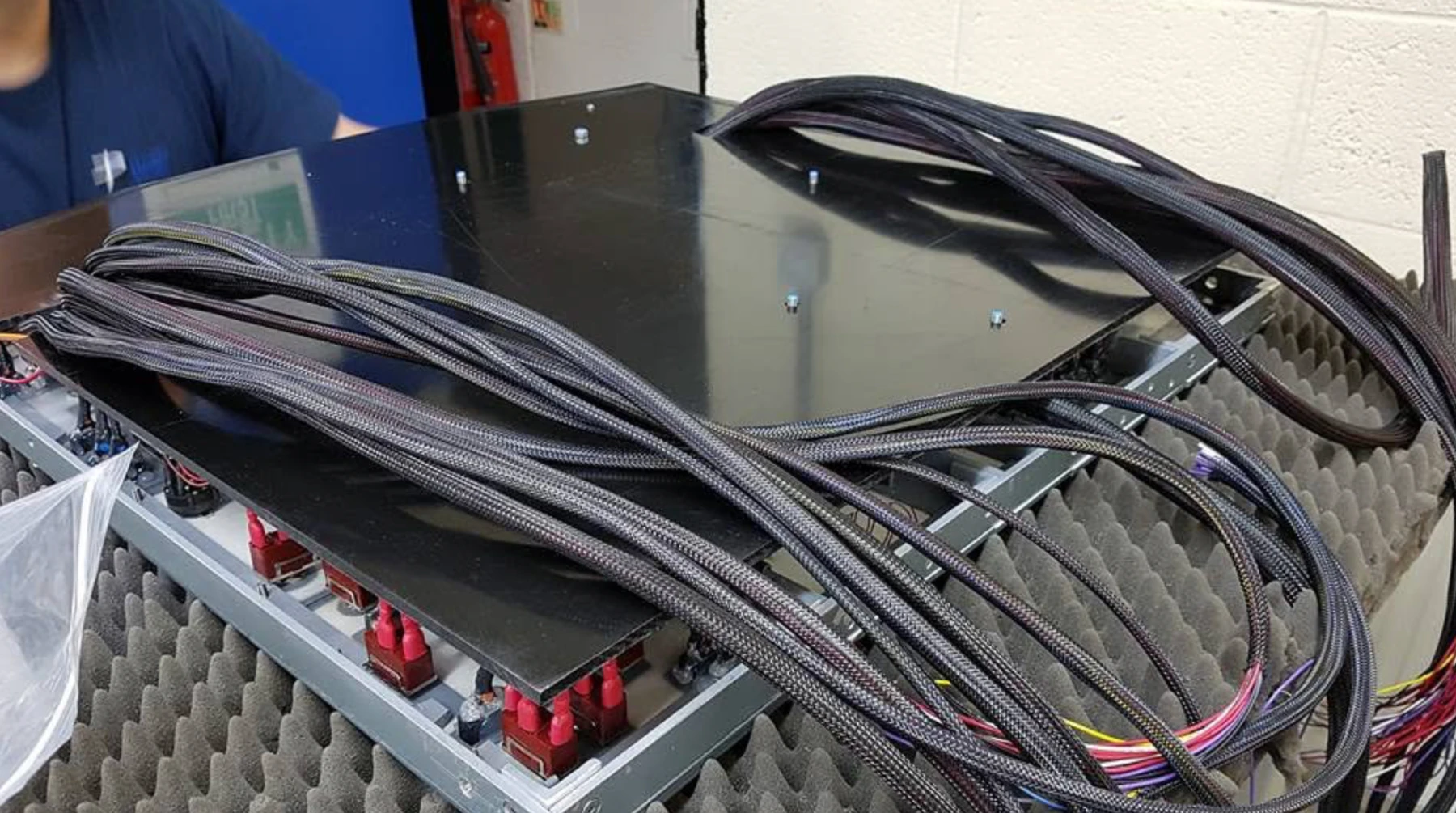
A flight-deck interface needs to be in the right place for the participant. The electronics supporting it do not always need to occupy that same difficult-to-reach location. Our experimental forward-overhead concept explores that distinction by retaining the cockpit interface while placing the supporting PCB modules close to the instructor station.
The intended benefit is access: an engineer could investigate a hardware problem or change an accessible module without dismantling the surrounding simulator. This is a development objective of that particular prototype architecture, not a measured downtime guarantee.
Connections are part of the design
A remote-electronics layout introduces its own engineering questions. Wiring has to be routed, identified and supported. Connectors need to be accessible without being vulnerable to accidental disturbance. Cable length, signal compatibility, electrical protection and the path to each interface all need consideration.
The photographs of our overhead prototypes show these physical relationships directly: panel assemblies, individual connections and grouped looms. Their purpose on this site is to explain the development approach rather than disclose a complete electrical design or a wiring instruction.
Think in serviceable modules
A modular approach asks where a useful replacement boundary should sit. Removing a single board may be appropriate in one assembly; exchanging a complete labelled subassembly may be more practical in another. The right decision depends on access, diagnosis, available skills and the effect on neighbouring components.
We are interested in layouts that make faults easier to isolate and reduce the amount of unrelated equipment disturbed during a repair. Modularity is not the same as hot-swapping: these examples do not claim that components can be removed while powered.
The footprint is more than the platform
A simulator's occupied area includes more than its outer frame. A usable installation also needs allowance for participants, instructor visibility, equipment access and, where applicable, the platform's motion envelope. Keeping electronics beneath a station can consolidate equipment, but it does not remove the need for access and ventilation.
Our dual VR installation illustrates a compact arrangement with supporting computing equipment, connections and wiring below the simulators. Final space requirements depend on the chosen configuration and the room in which it will operate; no universal floor-area figure is implied.
Affordability across the working life
Initial purchase cost is only one part of a useful commercial discussion. Other considerations include integration effort, installation work, maintenance access, replacement components, software dependencies and periods when equipment is unavailable. A lower-priced component can become an expensive choice if its replacement requires unnecessary dismantling.
Our development priorities therefore look at both acquisition and continued ownership. We explore where simpler construction, accessible assemblies and appropriate component choices can offer value. Any expected saving needs a defined comparison and project-specific evidence before it becomes a quantified claim.
Longevity without overpromising
Equipment intended for repeated use needs a realistic plan for wear, component replacement and future changes. Design questions include whether a panel face can remain useful when its electronics change, whether a wiring route can accommodate service work and whether a future replacement part will fit the existing enclosure.
Repair planning is a recognised consideration in engineering design, including identifying the cause of a failure before choosing a remedy [3]. On our projects, long service life and easier upkeep are goals to work towards, not a fixed lifespan or a claim of maintenance-free operation.