
The problem under investigation
In the conventional arrangement being considered for this project, supporting circuit boards and hardware sit behind the overhead interface. Once the panel is installed within a cockpit structure, reaching those components can make fault investigation and replacement disruptive.
The research question was whether the cockpit interface could remain in place while the supporting electronics were relocated somewhere easier for an engineer to reach. The goal was to change the service task without losing the physical interface presented to the participant.
An interface-only concept
Our prototype concept retained the overhead as the participant-facing interface, with connections running to PCB hardware positioned near the instructor station. This separated the location needed for cockpit interaction from the location preferred for maintenance access.
The intention was that an engineer could inspect or change an accessible module while leaving the simulator structure assembled. It was an experimental system, and this case study deliberately describes the intended approach rather than claiming a measured repair-time improvement.
What the photographs show
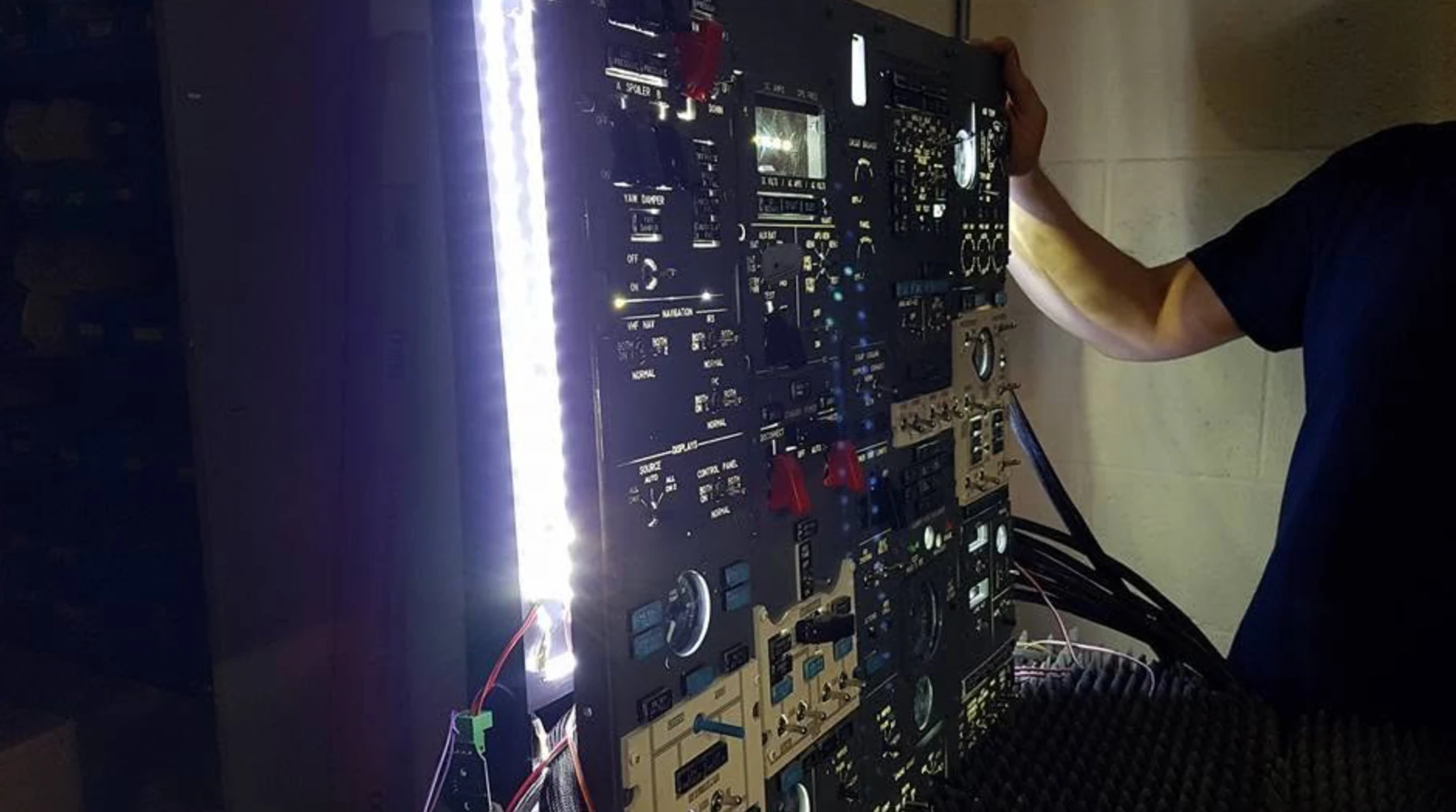
Front views show the overhead face and its controls. Edge and rear views reveal the wiring and harness arrangements that support the interface. The photographs are original development records supplied for the portfolio, not newly generated representations of the panel.
The rear view used on our homepage is particularly useful because it makes the connection work visible. It is the actual overhead prototype image, cropped for the card, rather than a generic electronics photograph.
The trade-offs deserve attention
Relocating electronics is not a free improvement. A longer connection path introduces routing and identification work, while the module location still needs a suitable enclosure and practical access. Interface compatibility and the behaviour of the assembled system must be considered as part of development.
A modular service boundary also needs to be clear. The person maintaining a device should not have to guess which loom belongs to which assembly or disturb unrelated components to reach the intended part. These are engineering considerations, not a published wiring specification for this prototype.
An idea with a defined purpose
The value of this work lies in asking a focused question about serviceability. It demonstrates how a simulator project can be approached from the maintenance perspective as well as from the cockpit.
No hot-swap capability, safety certification or production availability is claimed. Contact us to discuss interface architecture, accessible electronics and the practical constraints of a specific installation.